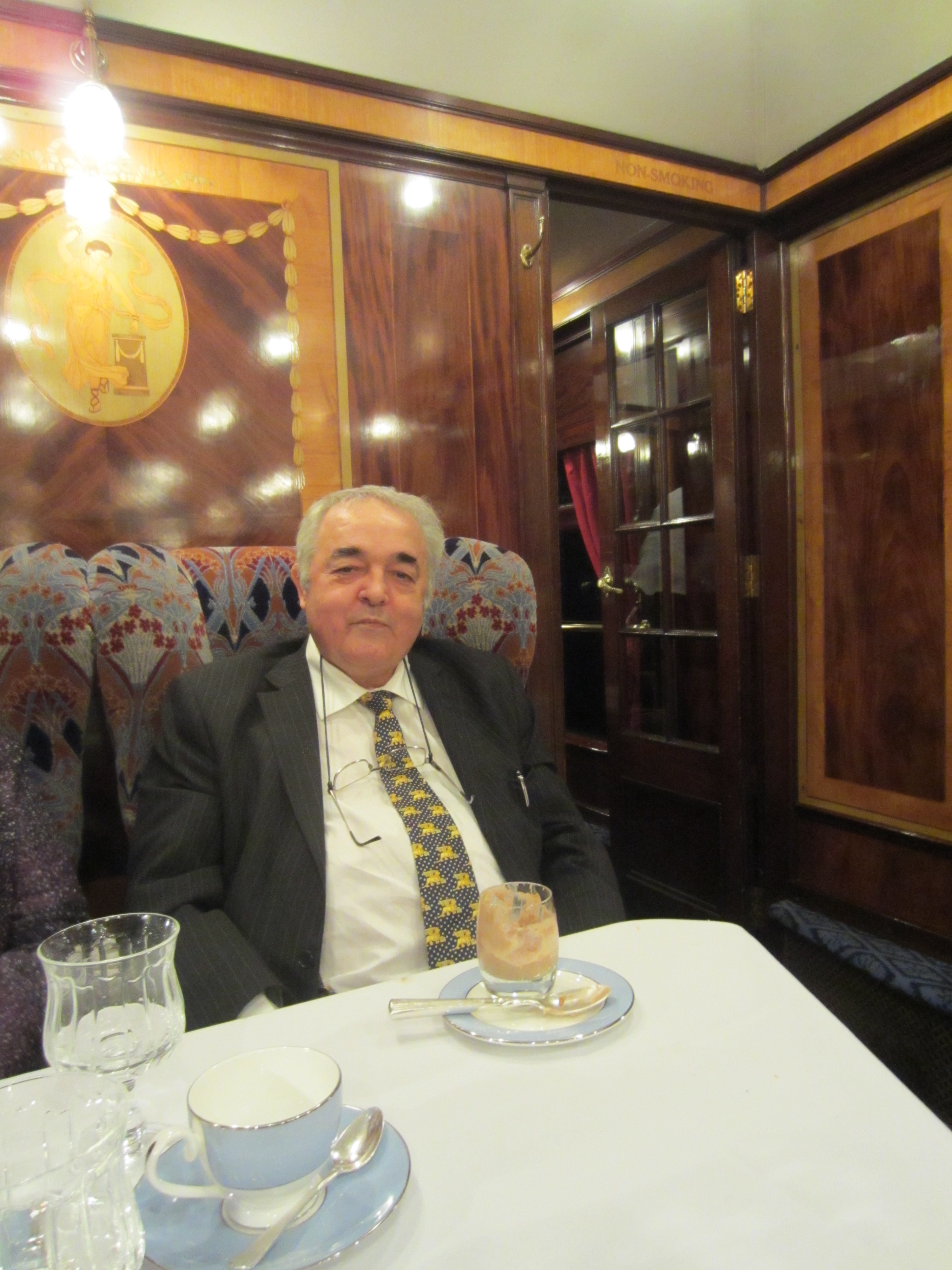
Friday 24th January 2014. A trip on the Orient Express. To celebrate the birthday of our good friend Dr. Pat Crimmin, my wife Mary and I took her on a journey of unashamed luxury. Excellent food, we spent four hours travelling through the Surrey countryside … we even whistled through Egham, our home town.
All posts by Ian Angell
Pavlo Tanasyuk
My good friend Mrs Bhatia 1
My good friend Mrs Radha Bhatia, Chairperson of the Bird Group, had given me an open invitation to look around the Bird Hospitality hotel in London: the Royal Park, at 3 Westbourne Terrace, London W2 3UL. On Friday 17th January 2014 I finally had the opportunity to visit this fabulous boutique hotel. I had the pleasure of being given a guided tour by Lina Stahl, a Director of Bird Hospitality. This delightful and charming young lady took two hours out of her very busy schedule to show me around. I was most impressed by the efficiency of the staff, the quality of the fixtures and fittings, and the Regency decor of the rooms was exactly right, tastefully designed to match the classical architecture of the building. Every aspect the hotel emanated class. Take a virtual tour at www.theroyalpark.com and see for yourself. I will be directing all my friends there.
My good friend Mrs Bhatia 2
3 Wise Men at the Barbican

A great night out at the Barbican. On the 10th of January 2014 I invited two of my successful PhD students to join me at a violin concert given by Maxim Vengerov. Here we see Spiros Samonas and Daniel Osei Joehene in a photograph taken by Sasha Koloskov, an ADMIS student from 2010 who also attended the concert.
Property is taxation in waiting
There’s a great article in the Sunday Times today (March 16, 2014), all about the perils of British expat’s in EU countries. If ever we needed proof that governments are thrashing around, frantic to tax everything in sight, then this is it.
In France you have to declare bank accounts held in other countries you are fined €1500 per account per year; this includes PayPal. One expat has been fined a total of €25,000 because he had totally forgotten about a dormant account.
Of course the real target is property. Renting out a second home in France now incurs a 15.5% ‘social charge’ on top of a %20 tax, and this cannot be offset against British Income tax. Selling a second home incurs a 19% capital gains tax, and a 15.5% ‘social charge’ if the property was owned for less than 22 years.
No Hiding Place
How are the mighty fallen. Uli Hoeness, hero of Germany’s 1974 World Cup winning team, and president of Bayern Munich has been sentenced to three and a half years in jail for tax fraud.
Hoeness, had admitted hiding large sums in a Swiss bank under a “voluntary disclosure” scheme, hoping to avoid trial by paying the taxes owed plus a 6% interest. This is far more generous than the US tax evasion amnesties of 2009 and 2011, with fines being a substantial percentage of the total capital, not just the tax owed. Of course, any one going down this route must declare everything. Further revelations showed that Hoeness had been dishonest when disclosing the scale of his assets, hence the court case.
Subsequently 26,000 German tax evaders have opted for voluntary disclosure. If a national icon can be taken out, then no one is safe.
All around the world governments are tracking down tax evaders with a vengeance. No one is safe from the tax police. Once you are in their crosshairs there is no escape. In the age of computerization it’s like shooting fish in a barrel. One way or another, they will find out the scale of any individual’s tax evasion. As we are saying in The Flight of the Golden Geese, the days of tax evasion are over. The only legal way for the rich to protect their wealth from their country’s tax grab is to give up their citizenship, and leave for friendlier jurisdictions.
A Manifesto for Information Systems
I wrote this piece with a colleague Bernhard Straub nearly a quarter of a century ago – it is still just as relevant today, which only goes to show how little has changed in the intervening years. Quite depressing really.
Computer output carries a weight of meaning and authority that is derived from the dominating position of science and technology in the mind-set of Western society. The early successes of computer installations has generated and reinforced a platform of authority for information technology, and lays claim to scientific legitimacy, from which to justify further action. It is easy to be seduced into accepting an equivalence between the functionality of computerized models and the behaviour of ‘real problems’, where control over the model becomes control over the underlying problem. Knowledge is substituted with a mutual understanding, by way of an agreed explanatory framework – information technology – that assumes for itself the position of a superior interpretative power. What we can know about a problem situation is replaced by what we can explain within the limitations of information technology. The validity of decision-making shifts from objective knowledge to a numerical justification based on this self-propagating consensus authority.
Information technology is just another technological enterprise whereby man feels he can subjugate nature by mere will. The sheer power of optimistic rationality insists that progress (being in control of a better world) is achievable through rational (expressed as scientific and technological) thinking. In light of this dominant mind-set, it was inevitable that computer based information systems would be thrust as a panacea upon organizations, all with the highest motives. However, after the enormous success of IT over the past thirty years, as the idiotic ‘eighties give way to the no-nonsense ‘nineties, it is high time that we reconsider the trajectory of past, present and future developments.
Despite the growing number of computer system failures and the absurdity of confusing means with ends, form with content, functionality with solution, IT still whispers in our ears that computerization really is a competitive advantage, even in companies where IT is not a core-technology. What is more, we are haunted by images of competitors gaining a commercial lead by introducing IT. This undercurrent makes it easier to justify expenditure on IT schemes, when everybody else does, rather than to explain why we should not invest. But it is ideological blindness, and not the reality of advantage, that is bouncing us into these decisions. As a consequence, the portrayal of IT as a controllable tool goes unchallenged in a vicious circle of the blind leading the blind. A legacy of this technology is a rigid framework of ‘social engineering’, forcing organizations to accommodate the requirements of IT, and not the reverse. The mounting strain that this loads onto individual organizations necessitates a major rethink about the applicability of information technology. For IT is not a prescription, or even a proscription to action, but merely an interpretation of the commercial environment. Information is not a commodity, but a consequence of context.
Caution and skepticism are the healthiest perspectives to adopt, where neither the technology nor environment are in steady-state. Computer derived answers are inert; they do not reflect the nuances of ‘being there’, and the consequent differences between the model and the modelled. The promise of rationality and control that characterizes the optimism of computerization hides a darker aspect. Systems have more in common with organisms than mechanisms. To see computer based information systems as easily manageable tools, as suggested by the technological approach, is dangerously misguided. Computerization is a prisoner of societal consequences that cannot be controlled, no matter what the management regime. The task of IT-management is to cope with the manifestations and consequences of technological and organizational change.
Against this background of commercial uncertainty, business decisions will require a broad and solid understanding. This stance must be more than just a token tribute to philosophical problems and questions of meaning. It is not good enough to respond with an anti-intellectual ‘so-what?’ for this is a statement of complacency towards the questioning of cherished beliefs, hardly a stance that should be taken by a strategist in the face of uncertainty. Understanding must be disconnected from the prevalent authority. There is a crying need for a reassessment of the problems associated with the expansion of technological systems as integral parts of organizations. As new technology is confidently applied in ever more unstructured environments, the unsuitability of its instrumental rationalism brings about more frequent and increasingly disastrous consequences. The designers of grand schemes optimistically believe that, by mere intention, they can confine the consequences of using a computer installation to the achievement of a ‘wish list’ of their original goals. They fail to see that an evolving system is not the original installation, but what it has become, what it will become, and not what it was intended to be.
In response to this uncertainty, computerized bureaucratic systems are applied, increasingly rigid and inadequate structures leading to deadening conformity and repression. In their models, designers and bureaucrats can only see a tidiness that is a limited snapshot of fragments of ordered functionality and usability. Yet users know they are working in operational environments that are messy and vague, caused by the debris of detail in the unfolding history of a system and its environment. This debris holds the potential of disorder, and when reconstituted by a particular contextual significance and relevance, it can form an erratic and unpredictable nature. Rather than minimizing the risks and maximizing the opportunities nourished by this systemic behaviour, computer systems and methods that are built on narrow intentions and simple goals lead inevitably to counterproductiveness.
A new approach is needed, one that will deal with the consequence of technology, as embodied in the observed behaviour of organizations. This approach must balance the advantages against the limited applicability of computers, and be grounded in a theory based on experimentation and contingencies, and a sympathetic reaction to the disposition of the social and commercial environment. It must not be based, naively, on the belief that a description of the situation via models and structures will enable us to be ‘in control’. We can only control in the sense of formulating and precipitating actions or intentions, but this is not being in control of consequences. It is a delusion to assume that we are in control of IT, and to conclude by extension that organizations can be controlled accordingly. Even our vocabulary conspires in this self-deception. ‘Organizations’ are not totally organized, there is much that is disorganized and unorganized, even un-organizable. IT must be used to maintain flexibility and adjust tactical intention, so as to relate consequences to perceived strategic aims. Continuous experimental feedback within each organization is essential if we are to emphasize information and separate it from technology. We need this new attitude in order to overcome the cynical opportunism widespread in many stakeholders who are promoting ‘certainty through information technology’, preying as they do on the business world racked with doubt and uncertainty. They can no longer shift responsibility for tangible consequences onto a technology that ultimately cannot be culpable.
Another Government Cockup
I published this blog quite a few years ago, but here it is again just in case anyone missed this government ‘cockup’ (taken literally) first time around.
According to a spokesman, the UK Office of Government Commerce is “an organization that’s looking to have a firm grip on government spend!” To show they were on the ball it was decided they should have a new image. This involved spending £14,000 of taxpayers’ money on a new logo that was to appear on pens, mouse mats etc. (It’s best not to ask why a government organization needs to go in for all this expensive branding nonsense!).
Anyway, it only took a moment for staff to hold their pens upright, thereby turning the logo through ninety degrees, and for hysterical laughter to break out all across the office. Whoever designed this logo must also have thought that government is just a bunch of “w*****s”. The OGC branded material soon appeared on e-Bay; staff couldn’t believe their luck over their windfall.
“The greatest thing since sliced bread”
As an emeritus professor in a department that researches ‘Innovation’, I am increasingly being asked about this hot topic. Rather than giving a bald ‘definition,’ let me talk around the issue, and that may hopefully clarify things.
Let’s get one misconception out of the way immediately: that creativity comes with the lone genius having a flash of inspiration, … the light-bulb moment! It’s a lot more complicated. Innovation isn’t a single event, rather it’s a continuous process. I’m with Thomas Edison: “genius is 1% inspiration, 99% perspiration.”
The creative process was mapped out in three stages by the nineteenth century German scientist, Herman Helmholtz as: Saturation, Incubation, and Illumination. French mathematician Poincaré added the extra notion of Verification.
Saturation: fill the mind with the problem – until the point where extra data won’t take you any further forward.
Incubation: Keep thinking – mental activity must continue, even subconsciously.
Illumination: The ‘light bulb’ comes on. This is not some single moment, but the result of a long drawn out process.
Verification: even then the idea must be checked empirically.
Numerous other authors have extended this list over the years:
First Insight ➔ Preparation ➔ Saturation ➔ Incubation ➔ Illumination ➔ Verification ➔ Evaluation ➔ Elaboration.
Here the original list of four has been topped and tailed with:
First Insight: a vague recognition
Preparation: collecting the necessary resources
Evaluation: is the result of any use/value?
Elaboration: taking it further; adjustment, expanding its utility.
Two further entries hover over the whole process:
Determination: keep going despite frustrations and set-backs.
Context & Timing: being in the right place at the right time, so that you can convince others to use your invention and that they begin to see it as “the greatest thing since sliced bread.”
And what is so great about sliced bread? The great invention shouldn’t be called sliced bread at all, but ‘pre-sliced’ bread. Whatever we choose to call it, its invention exhibits all the above features of innovation.
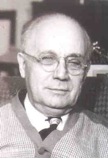
Otto Frederick Rohwedder, from Iowa, first filed a patent for a loaf-slicing machine in 1912 – he even sold his jewellery business to fund development. Kidney disease didn’t stop him, nor did his workshop burning down, destroying his tools and prototypes. Even so, the world’s first mechanically sliced bread didn’t go on sale until July 7, 1928. He had met with resistance from bakers, who thought that sliced bread would quickly go stale. That argument faded when in 1928, the Continental Bakery of New York introduced Wonder Bread, an unsliced loaf with a waxed paper wrapper to conserve freshness.

But that wasn’t the whole story. The clincher turned out to be a particular electric toaster invented by Charles P. Strite, although his toaster wasn’t the first. That accolade seems to belong to a British firm: Crompton & Co in 1893. In the intervening years many more types were produced, among the most notable being the D-12 introduced by General Electric in 1909. {Toasters have an absolutely fascinating history, and I wholeheartedly recommend that anyone interested in innovation should visit www.toaster.org, the site of the Toaster Museum Foundation, where you will get a dynamic and particular sense of how innovation progresses.}

During World War I, Strite worked in a factory where each day he saw toast being burnt in the cafeteria. The problem was people took their eye off the bread as it toasted. His solution was a toaster that did not require human attention: the Toastmaster! This was a spring-loaded, automatic, pop-up toaster with a variable timer. Sold to restaurants from 1919, it hit the retail shops in 1926.
Using Rohwedder’s machine, pre-sliced Wonder Bread was in production by 1930. Sliced bread in waxed paper wed to the Toastmaster was a marriage made in capitalist heaven. Its market penetration is legendary. By 1933, 80% of all the bread sold in the United States was pre-sliced and wax wrapped.
Here we have a clear example of how no product of the creative mind comes into existence in a flash, or in a vacuum – it co-evolves with other artefacts. Every invention and creation stands on the shoulders of past giants; but it also needs the popular acceptance of other prior inventions, which together spark interest in the marketplace. However, if access to those inventions is restricted, then there will be no experimentation, no variation, no creativity.
Most innovations are applications/variations that spring from prior innovations, exactly as Herbert Kroemer, the 2000 Nobel Physics Laureate, explains in his Lemma of New Technology: “The principal applications of any sufficiently new and innovative technology always have been – and will continue to be – applications created by that technology.”
The same can be said of innovation in general. Innovations do not come from orthodox creators, but from users on the margins, who are free to experiment with radical ideas. What Kroemer is implying is that although a technological innovation occurs in a particular context, numerous people must run with that innovation to create a whole raft of derivative applications, which could not even be imagined by the original inventor. If that inventor restricts what can be done with his work, in effect banning derivative works, then he is limiting its potential, and cutting off all future revenue streams.
There is no knowing in advance what the really useful applications will be. There needs to be wide-scale experimentation – the more the merrier. Natural selection will bring the successful to the fore. According to Saul Godin, unless the idea of the innovation’s utility has captured the imagination of the market, unless the idea has spread, then there is no selection – natural or otherwise – and so nothing happens. Over-charging for, or overprotection of intellectual property will ensure that the innovation stays in the wilderness.
Suppose that Crompton & Co. had been allowed to copyright the concept of an electric toaster in 1893 – then derivatives would have been blocked; Strite would not have created the pop-up toaster; and Rohwedder’s sliced bread would not have achieved the status of being “the greatest thing!”
Photo permissions, with thanks:
Otto Rohwedder: Frank Passic; www.albionmich.com
Charles Strite and Toastmaster: Eric Norcross; www.toaster.org

This work is licensed under a Creative Commons Attribution 4.0 International License.
Attribution: http://www.ianangell.com